

Hayes Door and Window
No matter if you're replacing an existing front door or installing a brand new one, it's important to choose a quality product. Hayes Door and Window offers an array of high-quality, stylish upvc doors that improve the exterior appearance of your home.
For more information, get in touch today.
The History of Hayes Place
The history of Hayes Place is a long and complicated one. It began with a brand new double-storey house constructed by Robert Hall opposite Hayes Church in about 1600 on the site of Asshleys. In the next century, it was to undergo many changes, including being a family home for Sir Stephen Scott.
Hayes Place is a large mansion that sits at the top an hill in Redlands. It's a favored area for commuters but it's also an great location to live in.
Mary Folsom Hayes Chynoweth constructed it as an individual residence. She claimed to be an expert faith healer. She and her sons were financially able to afford the vast mansion thanks to their iron-rich mining fortune in Wisconsin.
In 1880, Everard Hambro, a banker, bought the property after her death. He hired George Devey, the architect to redesign the house.
The west side of the house was transformed thanks to the addition of a brand new entrance hall, dining room and terrace. He also replaced the front doors and windows and put in an electric lighting system.
In 1912 the house was described as constructed with two linked wings made of stock brick and stone. It had a porch as well as a huge central hallway that had been divided by a narrow hall.
When the house was renovated in 1926 it was transformed into the principal administrative building of the University of Buffalo, now known as Hayes Hall. Its distinctive clock tower and Westminster chimes remain a landmark on South Campus.
Today, the family who owns the mansion is deeply concerned about its history and the legacy it has left to the community. They are planning to invest $43.5 million in order to restore it, and will hold an opening ceremony in September.
There are numerous ways to visit the mansion. Visitors can purchase a site pass and tour the first and second floors, as well as visit the cupola.
You can also take a tour of both the mansion or the museum. This allows you to view areas that aren't open to the public. This includes the cupola. It is small, enclosed room that has 360-degree views over Spiegel Grove.
The Rectory
A rectory is a home that is used for the benefit of a parish priest, often in a religious congregation. It is often located close to the Church, so that members of the congregation can contact the pastor for spiritual or medical assistance.
A range of terms are used to describe a rectory such as manse, parsonage presbytery, and vicarage. It can also be used to describe the residence of the rector who isn't a member of a non-denominational faith.
Rectories are usually large enough to hold clergymen, their her family, and visiting Church officials, in congregations where priests are allowed to get married. Some rectories offer guest rooms, and some have a dining room where the priest is able to entertain guests.
There are many different kinds of rectories available in the United States, and some people choose to reside in them for various reasons. For instance some rectories are utilized to house the church's community office or museum.
People prefer to live in rectories because they are located in central towns, making it easier for them to commute to work. They are also less noisy than other areas of a town.
Margaret and Darren Hayes Powell are currently renovating The Old Rectory, one of the most prominent Rectories in the area. They have spent 18 months renovating the property and have put it on the market for pounds 1.75 million.
They have also incorporated many historical features like coving or original china cabinets into their design of their house. They also modernized the doors, windows and kitchen appliances.
This renovation of The Old Rectory was a labor of love and passion, as Darren and Margaret have worked tirelessly to transform the property into something completely new. It's a stunning home that is ideal for anyone wanting to create their own distinctive style in the historic village of Knightwick, Worcestershire.
The original structure dates as far as 1755 when Revd William Farquhar, the rector of the church, was granted permission by the Archbishop to rebuild the house. The specification he provided describes the construction of the first rectory, and includes plans for the stairs, floors windows, doors and partitions made of lath and plaster, and a Brewhouse.
The Walnut Tree
Hayes had its own bakery and confectioner at the end of the 18th-century. The Walnut Tree on Hayes Street was a popular spot for breakfast as well as tea and lunches until 2003 when it closed.
This two-storey building, with an hipped roof was listed as Grade II in 1973. The ground floor is comprised of the central doorcase, which has a an open-air wooden weather hood that is mounted attached to brackets and two arched bow windows. The first floor has 2 casements and the roof is also covered with a hipped.
The building is believed have been built in 1790, when William Dalton owned the land. In 1841 Dalton sold the property to George Norman of Bromley. The house was occupied by a baker until 1895, when it was bought by Charles Whitby.
The shop was then run by his son James Whitby and a newsagent, Arthur Carter. The shop remained open until the war and , when he returned to Hayes in 1928, the business was sold to Ernest Sidney Poynter who lived in Hayes with his wife Elizabeth. The business was later taken over by Peter and Eileen Sheath who operated it for many years , before selling it to Simon and Sarah Butler in 2006.
The walnut staircase, which has 57 steps, is one of the most striking features of the house. It was made of butternut and black walnut and has an as high as 45 feet to the fourth floor.
On the ground floor, there are many rooms that are accessible. The ground floor includes the parlor, a bedroom and a library that has 13-foot ceilings. The library also has an enormous painting of Hayes by William Carl Brown.
Another interesting feature is the set of 12 glass-lined wooden cases where Hayes could display his best souvenirs. Hayes called them his "Little Smithsonian."
On the upper floors are bedrooms and an attic used for storage. The fourth and third floors are only accessible by guided tours.
The house is an National Historic Landmark that has been visited by more than 32,000 people every year. You can visit the house to learn more about Hayes and his time in the office. The house is open to the public Monday through Saturday, 9 a.m.-5 p.m.
23 Hayes Street
23 Hayes Street, also known as the door and window of the Hayes is among the oldest buildings within the village. It is a two-storey structure that dates back to the 18th century. It was originally constructed to serve as a bakery. It served the village for more than 100 years, but it was closed in 2003 and it is now a home.
Built in 1888, St Mary Cottages is a terrace consisting of 10 cottages, designed by George Devey for Sir Everard Hambro. In 1994, the terrace was listed as Grade II.
The cottages have a roof that is steeply pitched with raking queen struts as well as straight wind bracing set on Jowel posts. They are weatherboarded with windows that are square headed to each bay with small windows.
The property has cottages, as in addition to a large garden and basement. The ground floor of the building is used as a gathering space, while the top floor is home to Mr. and Mrs. Clarke, who bought the property in 2004. They have since renovated the house to a high standard.
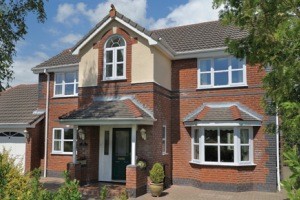
Another fascinating aspect of this historic structure is the chimneys' original design. These are especially impressive. The roof is also covered with a thick layer of lead.
The original house was an individual cottage. It is possible that an additional cottage was added to the original structure, however it isn't clear if this was related.
There is a huge central entrance hall. It is the front room of the building and is accessible from the garden. There there is also a small kitchen. The door to the entrance is constructed from oak and the interior is decorated with the look of a Georgian kitchen.
On the first floor , there are three bedrooms and the master bedroom having a balcony as well as an the bathroom with an ensuite. window replacement hayes is on the first floor, and also the kitchen fully-equipped.
The property is in an established area that provides residents with access to shops, restaurants, and other facilities. It is also a quick walk to the Civic Center, Octavia Street and Patricia's Green.